INTRODUCTION
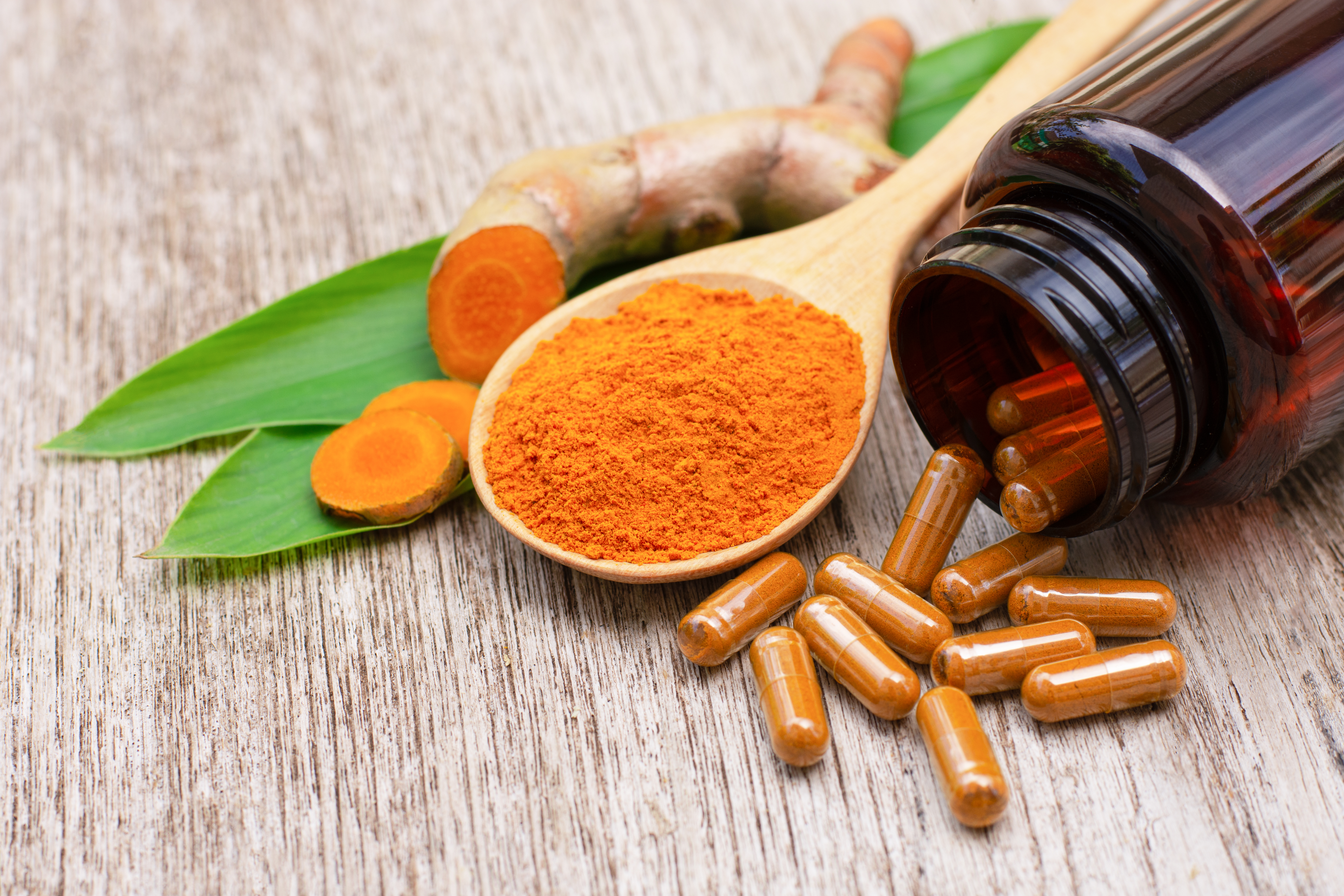
Curcumin is a bright yellow chemical produced by plants of the Curcuma longa species. It is the principal curcuminoid of turmeric (Curcuma longa), a member of the ginger family, Zingiberaceae. It is sold as an herbal supplement, cosmetics ingredient, food flavoring, and food coloring.
Chemically, curcumin is a diarylheptanoid, belonging to the group of curcuminoids, which are phenolic pigments responsible for the yellow color of turmeric.
| Synonyms | 1,7-Bis-(4-hydroxy-3-methoxyphenyl)-1,6-heptadiene-3,5-dione Turmeric yellow Diferuloylmethane |
| CAS no. | 458-37-7 |
| EINECS no. | 207-280-5 |
| Molecular formula | C21H20O6 |
| Molecular weight | 368.39 |
| Structure | 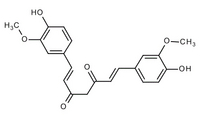 |
Applications
Widely used in food, dishes, cakes, candy, canned drinks, cosmetics & medicine coloring.
Some Health Benefits:
| Turmeric contains bioactive compounds with powerful medicinal properties |
| Curcumin is a natural anti-inflammatory compound |
| Dramatically increases the anti-oxidant capacity of the body |
| Boosts brain derived neurotrophic factor, linked to improved brain function and a lower risk of brain diseases |
| Curcumin should lower the risk of heart disease |
| Curcumin can help prevent (and perhaps even treat) cancer |
| Curcumin may be useful in preventing and treating Alzheimer’s disease |
| Arthritis patients respond very well to curcumin supplements |
| Curcumin has incredible benefits against depression |
| Curcumin may help delay aging and fight age related chronic diseases |
| Grades available |
|---|
| 1. Curcumin 95% |
| 2. Curcumin 95% Solvent Free |
| 3. Curcumin 95% Ethanolic Extract |
| 4. Curcumin Water Dispersible 10% & 20% |
SPECIFICATIONS
| Test | Test Method | Specification |
|---|---|---|
| Physicochemical Tests | ||
| Botanical name | – | Curcuma longa |
| Plant part used | – | Rhizome |
| Herb ratio | – | 25:1 |
| Description | Visual | Orange yellow coloured powder |
| Loss on drying at 105°C | USP<731> | NMT 2.0% w/w |
| Assay | ||
| Curcuminoids content | by HPLC | NLT 95% w/w |
| Total Heavy metals | USP<231> | NMT 10 ppm |
| Arsenic | ICP-MS | NMT 1.0 ppm |
| Lead | ICP-MS | NMT 3.0 ppm |
| Mercury | ICP-MS | NMT 0.1 ppm |
| Cadmium | ICP-MS | NMT 1.0 ppm |
| Microbiological analysis | ||
| Total plate count | USP<2021> | NMT 1000 Cfu/gm |
| Yeast & Mould | USP<2021> | NMT 100 Cfu/gm |
| Salmonella | USP<2022> | Absent |
| Escherichia coli | USP<2022> | Absent |
| Staphylococcus aureus | USP<2022> | Absent |
| Pseudomonas aeruginosa | USP<2022> | Absent |
STORAGE
Store in a cool, dry, well – ventilated warehouse. Stay away from fire and heat. Prevent direct sunlight.
PACKING
25 kg drum.
DMF status
Available US-DMF filed with US FDA.
No matter the quantity you need, our exceptional quality and service will make ExSyn your supplier of choice! If you need any additional information or SDS, please contact us.
Diacetone Alcohol (DAA) is an aliphatic hydroxy ketone produced through the base-catalysed aldol addition of two acetone molecules. It contains both ketone and tertiary hydroxyl functionalities, offering excellent solvency and chemical reactivity.
As a high-boiling oxygenated solvent and valuable chemical intermediate, DAA finds broad application in paints and coatings, printing inks, adhesives, industrial cleaning, cosmetics, and textiles. It is also used as an intermediate in the production of mesityl oxide and MIBK. (4-methylpentan-2-one).
Kojic acid is a natural fungal metabolite produced through natural fermentation of carbohydrates. It works primarily as a tyrosinase inhibitor, suppressing melanin production to help reduce dark spots and even out skin tone. It also delivers antioxidant benefits, neutralizing free radicals and protecting skin cells from oxidative stress. With its naturally weak acidic profile, kojic acid is a multifunctional ingredient suited for brightening and protective skincare formulations.
(S)-Oxetan-2-yl-methanamine is a chiral oxetane-containing primary amine. The compound features a strained four-membered oxetane ring and an aminomethyl substituent, making it a valuable building block in modern medicinal chemistry. Due to its unique physicochemical properties, including increased polarity and metabolic stability compared with conventional alkyl groups, it is widely employed as an advanced pharmaceutical intermediate in drug discovery and development programs.
Guanidine carbonate is a white, crystalline, water-soluble compound with an alkaline and ionic nature. Composed of guanidinium cations and carbonate anions, it offers chemical stability, buffering capacity, and good formulation compatibility. In textile applications, it is used in formulations and fabric treatments for its thickening, softening, lubricating, anti-static, and flame-retardant properties, contributing to improved fabric finish and performance.
Tin(II) sulfide (SnS) has emerged as a safe and sustainable semiconductor owing to its non-toxicity, low cost, and natural abundance. It has attracted significant interest for solar energy conversion in thin-film photovoltaic devices because of its suitable band gap, which is approximately 1.3 eV in the orthorhombic phase and 1.5-1.7 eV in the cubic phase. In addition to photovoltaic applications, SnS is used in solid-state lubricants, near-infrared detectors, Lithium-ion batteries, and various sensing devices.
Nikethamide is a synthetic organic compound derived from nicotinic acid (vitamin B₃). It consists of a pyridine ring linked to a diethyl amide functional group and belongs to the class of pyridine amide derivatives.
(2-Methoxy-1-methyl-2-oxoethyl)triphenylphosphonium bromide is a stabilized phosphonium salt widely used as an intermediate in organic synthesis. Due to presence of an ester group, the compound generates a stabilized ylide that is particularly useful for synthesizing α, β-unsaturated esters, valuable intermediates in pharmaceuticals, agrochemicals, fragrances, and fine chemicals.
p-tert-Butylphenol (PTBP), is an aromatic organic compound consists of a phenol ring substituted with a tert-butyl group at the para (4-) position, giving it improved thermal stability and hydrophobic properties compared to phenol. PTBP features significant hydrogen bonding capabilities, which enhance its solubility in organic solvents. PTBP is used primarily as an intermediate in the manufacturing of polycarbonate plastics, phenolic resins, and epoxy resins.
Yttrium oxide (Y2O3), also known as yttria, is an air-stable, odorless white powder. It is a highly stable, chemically inert ceramic with a very high melting point. It is insoluble in water but readily dissolves in most strong acids. Increasing the specific surface area and porosity of Y2O3 can further improve its relevant physical and chemical properties.