
INTRODUCTION
Permethrin is an insecticide in the pyrethroid family. Pyrethroids are synthetic chemicals that act like natural extracts from the chrysanthemum flower.
Manufacture
Permethrin is produced by condensation of 3-phenoxybenzyl alcohol with (1RS)-cis/trans-3-(2,2-dichlorovinyl)-2,2-dimethylcyclopropanecarboxylic acid.
| Synonyms | 3- (2,2-Dichloroethenyl)-2,2-dimethylcyclopropanecarboxylic acid (3 –phenoxyphenyl)-methyl ester; 3-phenoxybenzyl (1RS)-cis-trans-3-(2,2-dichlorovinyl)-2,2-dimethylcyclopropanecarboxylate |
| CAS no. | 52645-53-1 |
| EINECS no. | 258-067-9 |
| Molecular formula | C21H20Cl2O3 |
| Molecular weight | 391.3 |
| Structure | 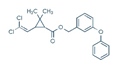 |
APPLICATIONS
Permethrin is used in agricultural, textile, food and pharma industries. Some of the key applications where it is used are:
| Insecticide |
|---|
| to protect crops & to kill livestock parasites |
| on structures and buildings, including livestock housing and food-handling establishments. Permethrin can also be used in numerous residential sites, both indoor and outdoor and on pets |
| to prevent insect attack on woollen products |
| in aircraft disinfection |
| Insect repellant |
|---|
| as a personal protective measure, permethrin is applied to clothing. It is a cloth impregnant, notably in mosquito nets and field wear. |
| while permethrin may be marketed as an insect repellent, it doesn’t prevent insects from landing. Instead, it works by incapacitating or killing insects before they can bite. |
| in pet flea preventive collars or treatment (safe for use on dogs but not cats) |
| in timber treatment |
| Medicinal |
|---|
| available for topical use as a cream or lotion |
| used for the treatment and prevention in exposed individuals of head lice |
| used as a medication in the treatment of scabies in humans and animals |
SPECIFICATIONS – EP
| Test | Unit | Specification |
|---|---|---|
| Appearance | – | Colorless or slightly brownish viscous liquid, semi solid or crystalline solid. |
| Solubility | – | Practically insoluble in water, very soluble in heptane, freely soluble in anhydrous ethanol, sparingly soluble in ethylene glycol. |
| Identification – by IR – by HPLC | – – | IR Spectrum exhibits maxima which are only at the same wave number as those in “Reference Spectrum of Permethrin Reference Standard“ The 2 Principal peaks in the chromatogram obtained with the test solution are similar in retention time and in cis/trans ratio to the 2 principal peaks in the chromatogram obtained with the reference solution |
| Water (by KF) | % | NMT 0.25 |
| Sulphated Ash | % | NMT 0.1 |
| Related Substances (by GC) – Impurity B – Impurity C – Impurity G – Unspecified Impurities – Total Impurity | % % % % % | NMT 0.15 NMT 0.15 NMT 0.10 NMT 0.10 NMT 0.50 |
| Residual Solvent – IPA – Toluene – DMF – *Benzene | ppm ppm ppm ppm | NMT 5000 NMT 890 NMT 880 NMT 2 |
| Assay (on anhydrous basis) | % | 98.0 – 102.0 |
| Cis isomer | % | 23.0 – 27.0 |
| Trans isomer | % | 73.0 – 77.0 |
*Benzene is not used in process, but tested due to the use of Toluene
PACKAGING OPTIONS
25 Kg HDPE Drums
STORAGE
Store in a sheltered place away from sources of heat and moisture
CERTIFICATION
WHO-GMP, DMF & CEP
No matter the quantity you need, our exceptional quality and service will make ExSyn your supplier of choice! If you need any additional information or SDS, please get in touch with us.
Diacetone Alcohol (DAA) is an aliphatic hydroxy ketone produced through the base-catalysed aldol addition of two acetone molecules. It contains both ketone and tertiary hydroxyl functionalities, offering excellent solvency and chemical reactivity.
As a high-boiling oxygenated solvent and valuable chemical intermediate, DAA finds broad application in paints and coatings, printing inks, adhesives, industrial cleaning, cosmetics, and textiles. It is also used as an intermediate in the production of mesityl oxide and MIBK. (4-methylpentan-2-one).
Kojic acid is a natural fungal metabolite produced through natural fermentation of carbohydrates. It works primarily as a tyrosinase inhibitor, suppressing melanin production to help reduce dark spots and even out skin tone. It also delivers antioxidant benefits, neutralizing free radicals and protecting skin cells from oxidative stress. With its naturally weak acidic profile, kojic acid is a multifunctional ingredient suited for brightening and protective skincare formulations.
(S)-Oxetan-2-yl-methanamine is a chiral oxetane-containing primary amine. The compound features a strained four-membered oxetane ring and an aminomethyl substituent, making it a valuable building block in modern medicinal chemistry. Due to its unique physicochemical properties, including increased polarity and metabolic stability compared with conventional alkyl groups, it is widely employed as an advanced pharmaceutical intermediate in drug discovery and development programs.
Guanidine carbonate is a white, crystalline, water-soluble compound with an alkaline and ionic nature. Composed of guanidinium cations and carbonate anions, it offers chemical stability, buffering capacity, and good formulation compatibility. In textile applications, it is used in formulations and fabric treatments for its thickening, softening, lubricating, anti-static, and flame-retardant properties, contributing to improved fabric finish and performance.
Tin(II) sulfide (SnS) has emerged as a safe and sustainable semiconductor owing to its non-toxicity, low cost, and natural abundance. It has attracted significant interest for solar energy conversion in thin-film photovoltaic devices because of its suitable band gap, which is approximately 1.3 eV in the orthorhombic phase and 1.5-1.7 eV in the cubic phase. In addition to photovoltaic applications, SnS is used in solid-state lubricants, near-infrared detectors, Lithium-ion batteries, and various sensing devices.
Nikethamide is a synthetic organic compound derived from nicotinic acid (vitamin B₃). It consists of a pyridine ring linked to a diethyl amide functional group and belongs to the class of pyridine amide derivatives.
(2-Methoxy-1-methyl-2-oxoethyl)triphenylphosphonium bromide is a stabilized phosphonium salt widely used as an intermediate in organic synthesis. Due to presence of an ester group, the compound generates a stabilized ylide that is particularly useful for synthesizing α, β-unsaturated esters, valuable intermediates in pharmaceuticals, agrochemicals, fragrances, and fine chemicals.
p-tert-Butylphenol (PTBP), is an aromatic organic compound consists of a phenol ring substituted with a tert-butyl group at the para (4-) position, giving it improved thermal stability and hydrophobic properties compared to phenol. PTBP features significant hydrogen bonding capabilities, which enhance its solubility in organic solvents. PTBP is used primarily as an intermediate in the manufacturing of polycarbonate plastics, phenolic resins, and epoxy resins.
Yttrium oxide (Y2O3), also known as yttria, is an air-stable, odorless white powder. It is a highly stable, chemically inert ceramic with a very high melting point. It is insoluble in water but readily dissolves in most strong acids. Increasing the specific surface area and porosity of Y2O3 can further improve its relevant physical and chemical properties.