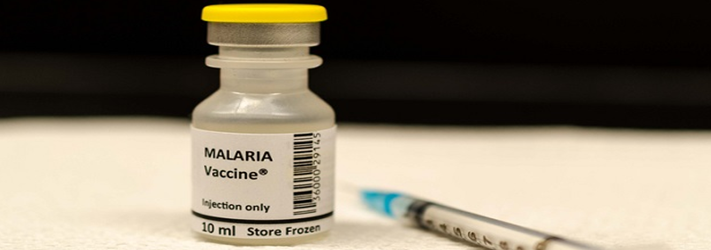
In a landmark announcement, the World Health Organization (WHO) has recommended the use of the first-ever malaria vaccine for children. WHO Director-General Tedros Adhanom Ghebreyesus endorsed the RTS,S/AS01 malaria or Mosquirix – a vaccine developed by British drugmaker GlaxoSmithKline (GSK).
The WHO has recommended extensive use of the RTS,S/AS01 vaccine among children in Sub-Saharan Africa and other regions with moderate to high malaria transmission. The vaccine acts against the deadliest malaria transmission parasite, P. falciparum, which is prevalent in Africa. The symptoms of malaria are–fever, headaches, and muscle pain, then cycles of chills, fever, and sweating.
According to Tedros, ” RTS,S malaria vaccine – more than 30 years in the making – changes the course of public health history. This vaccine is a gift to the world”.
The WHO said in a statement it was recommending the widespread application of the vaccine among children in sub-Saharan Africa and other regions with moderate to high malaria transmission.
Many vaccines exist against viruses and bacteria, but this was the first time that the WHO recommended broad use of a vaccine against a human parasite.
According to the latest World Malaria Report, there were an estimated 229 million cases of malaria globally in 2019, with the WHO African region accounting for 94 per cent of all cases and deaths.
A child under five years old dies of malaria every two minutes, according to UNICEF estimates, while WHO says that malaria is responsible for 260,000 deaths each year in children under five in Africa.
The third phase of clinical trials revealed that the vaccine was 50 per cent efficacious in preventing malaria in children aged between five and 17 months. The vaccine is given in three doses between these ages, with a fourth dose about 18 months later.
According to Reuters news agency, experts said the challenge now would be mobilising financing for production and distribution of the vaccine. GSK has to date committed to producing 15 million doses of Mosquirix annually up to 2028 at a cost of production plus no more than 5% margin.
A global market study led by the WHO this year projected demand for a malaria vaccine would be 50 to 110 million doses per year by 2030 if it is deployed in areas with moderate to high transmission of the disease.
Resources:
https://www.livemint.com/science/health/who-approves-world-s-first-malaria-vaccine-11633573233450.html
Global shipping costs have climbed to $4,000–$4,500 in October from $2,000–$2,500 in February 2026. Freight rates, which had eased through much of 2025 and early 2026 as the demand-supply balance improved, have rebounded sharply in recent months. The increase has brought shipping costs back into focus for businesses dependent on international cargo movement.
The U.S. Food and Drug Administration (FDA) has finalized guidance outlining how manufacturers should report post-approval manufacturing changes for biosimilar and interchangeable biosimilar products. The guidance provides greater regulatory clarity on changes involving production processes, manufacturing sites, analytical methods, raw materials, and process controls. It aims to ensure product quality while reducing unnecessary regulatory burden.
A significant uptick in M&A activity in the biosimilars sector is being driven by FDA regulatory reforms, a maturing patent litigation framework and a looming patent cliff — $200 billion of branded products are facing patent expiration by 2030.
The Drewry World Container Index edged lower this week as falling Asia-Europe rates outweighed firmer pricing on the Transpacific, with carriers preparing another round of blank sailings ahead of China’s Golden Week holiday.
On 14 July 2026, the European Parliamentary Research Service (EPRS) published a comprehensive briefing on PFAS (per- and polyfluoroalkyl substances), also known as ‘forever chemicals’. The document is intended to serve as a technical basis for MEPs in their upcoming political decisions on PFAS regulation and summarises the current state of scientific knowledge, regulation and procedures.
Following a series of typhoon disruptions in East China during the month of August, major ports including Shanghai and Ningbo continue to experience congestion and operational recovery challenges. Industry reports indicate that vessel schedules, yard operations, and equipment circulation remain affected as terminals work through accumulated backlogs from successive storm events.
Under REACH Annex XVII Entry 78, the EU has banned the placing on the market of synthetic polymer microparticles (SPMs) unless a specific derogation applies. Derogations exist for essential uses such as:
As a result of the amendment of the CLP Regulation (Regulation (EC) No 1272/2008 on the classification, labelling and packaging of substances and mixtures), new hazard classes have entered into force.
In a converging policy shift on both sides of the Atlantic, European regulators this week published a roadmap toward fully replacing animal testing for chemical safety assessments, while the US Environmental Protection Agency issued a rare update to its list of alternative test methods.