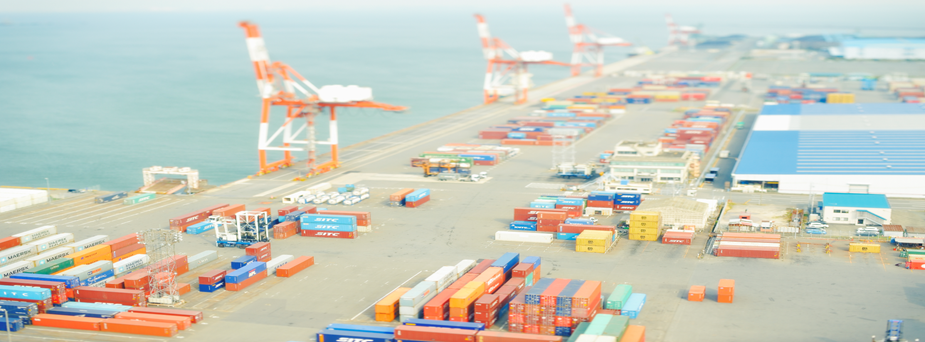
Following a series of typhoon disruptions in East China during the month of August, major ports including Shanghai and Ningbo continue to experience congestion and operational recovery challenges. Industry reports indicate that vessel schedules, yard operations, and equipment circulation remain affected as terminals work through accumulated backlogs from successive storm events.
Current vessel waiting times are reported at up to twelve days at Shanghai Yangshan Terminal, approximately seven to eight days at Shanghai Waigaoqiao, and three to five days at Ningbo, while yard utilization at key terminals remains near capacity, contributing to longer truck turnaround times and container handling delays.
As a result, customers may experience vessel schedule delays, longer transit times, cargo rollovers due to space constraints, port omissions, revised transshipment arrangements, equipment shortages, terminal gate congestion, delays in container pick-up and delivery, and changes to estimated arrival dates.
Industry sources currently expect congestion recovery to take approximately three to four weeks, potentially overlapping with the traditional pre-National Day shipping rush in September, which could result in continued schedule volatility in the coming weeks.
It is not China alone that is experiencing congestion. Freight platform Freightos has reported carriers omitting Shanghai port calls entirely due to severe congestion, with multi-day delays also affecting Shenzhen and Hong Kong.
Analysts have separately flagged mounting pressure on transit slots at the Panama Canal and equipment-related congestion at South Africa’s Durban port, suggesting capacity strain is building across more than one global chokepoint all at once.
For shippers and logistics teams navigating global trade, the practical risk extends beyond delayed vessels. Vessel bunching after each closure increases the likelihood of blanked sailings, rolled cargo and containers being bumped from bookings altogether. This disruption can ripple through inland transport networks long after a port itself reopens.
With typhoon season in the region typically running into October, it is a realistic near-term risk that Shanghai and Ningbo could be hit with yet further disruption in the coming months.
Reference:
https://www.oocllogistics.com/eng/newsinsights/news/2026/Pages/20260819.aspx
https://supplychaindigital.com/news/congested-chinese-ports-cause-supply-chain-operation-issues
Today we announce that Exim is rebranding as ExSyn. We are presenting a new brand identity and website as a reflection of our relentless transformation over the course of 30 years serving the pharma and chemical industries. The new brand builds upon our core strengths as a sourcing company and captures our most essential duty: helping improve people’s health and lives.
A significant uptick in M&A activity in the biosimilars sector is being driven by FDA regulatory reforms, a maturing patent litigation framework and a looming patent cliff — $200 billion of branded products are facing patent expiration by 2030.
The Drewry World Container Index edged lower this week as falling Asia-Europe rates outweighed firmer pricing on the Transpacific, with carriers preparing another round of blank sailings ahead of China’s Golden Week holiday.
Diacetone Alcohol (DAA) is an aliphatic hydroxy ketone produced through the base-catalysed aldol addition of two acetone molecules. It contains both ketone and tertiary hydroxyl functionalities, offering excellent solvency and chemical reactivity.
As a high-boiling oxygenated solvent and valuable chemical intermediate, DAA finds broad application in paints and coatings, printing inks, adhesives, industrial cleaning, cosmetics, and textiles. It is also used as an intermediate in the production of mesityl oxide and MIBK. (4-methylpentan-2-one).