INTRODUCTION
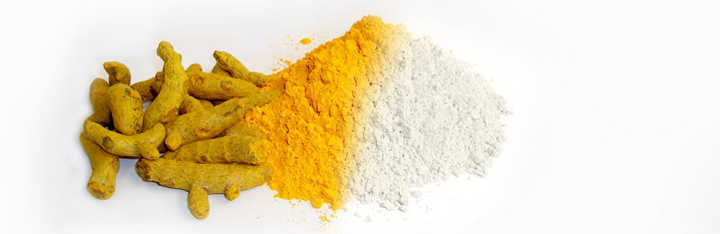
Tetrahydrocurcumin (THC) is a colorless hydrogenated product derived from the yellow curcumins, (the biologically active principles from the rhizomes of Curcuma longa), function as efficient antioxidant compounds. THC exhibit many of the same physiologic and pharmacological activities as curcumins and in some systems may exert greater antioxidant activity than curcumins. The superior antioxidant property of THC, combined with the lack of yellow color, render this product useful in achromatic food and cosmetic applications that currently employ conventional synthetic antioxidants.
| Synonyms | Tetrahydrodiferuloylmethane 1,7-bis(4-hydroxy-3-methoxyphenyl)heptane-3,5-dione |
| CAS no. | 36062-04-1 |
| EINECS no. | 609-201-3 |
| Molecular formula | C21H24O6 |
| Molecular weight | 372.41 |
| Structure | 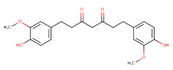 |
Applications
Widely used in Dietary Supplements, Nutritional Products & Cosmetics.
| Some key areas |
|---|
| Standardized Hydro curcuminoids have scientifically proven health benefits in various diseases like amyloid protein related diseases, cancer related diseases, multiples sclerosis, multiple myeloma, cystic fibrosis, prion diseases and other autoimmune diseases |
| As anti-oxidants |
| As dyes for imaging |
| As food additive |
| For cosmetic and anti-aging applications to reduce inflammation |
| As skin lightening formulation and against melanoma |
SPECIFICATIONS
| Test | Unit | Specification |
|---|---|---|
| PHYSICAL | ||
| Description | – | Off White to Cream color powder |
| Identification | – | To comply by HPLC |
| Loss on drying | % w/w | NMT 2.0 |
| Residue on Ignition | % w/w | NMT 2.0 |
| Tapped Bulk density | g/ml | 0.3 – 0.8 |
| Solubility | – | Soluble in Acetone |
| Sieve test (passes through) #40 mesh | % | NLT 90.0 |
| CHEMICAL | ||
| Assay – Content of Hydrocurcuminoids (by HPLC) (on dry basis) | % w/w | NLT 95.0 |
| OTHERS | ||
| Lead (Pb) | ppm | NMT 5.0 (by ICP-OES) |
| Arsenic (As) | ppm | NMT 1.0 (by ICP-OES) |
| Cadmium (Cd) | ppm | NMT 0.3 (by ICP-OES) |
| Mercury (Hg) | ppm | NMT 0.1 (by ICP-OES) |
| Residual Solvents | – | Should comply by ICH/USP |
| Residual Pesticides | – | Should comply by ICH/USP |
STORAGE
The product is stored at ambient temperature.
PACKING
25 kg drum.
FDA status
Facility is registered with US-FDA.
No matter the quantity you need, our exceptional quality and service will make ExSyn your supplier of choice! If you need any additional information or SDS, please contact us.
Teprenone (Geranylgeranylacetone, GGA) is a mixture of the all-trans and mono-cis isomers of 6,10,14,18-tetramethyl-5,9,13,17-nonadecatetraen-2-one (in a weight ratio of 3:2). It is an acyclic isoprenoid compound with a structure like retinoids and is widely used for the treatment of gastrointestinal ulcers.
Ciclopirox Olamine (CPO) is the N-oxide of a 2 -hydroxy pyridine derivative that carries antifungal, antibacterial, and anti-inflammatory properties. It is composed of 6-cyclohexyl-1-hydroxy-4-methyl-2(1H)-pyridone combined with 2 aminoethanol (olamine) in a 1:1 ratio.
N,N-Dimethylglycine sodium salt (DMG Na) is the sodium salt form of N,N-dimethylglycine, a tertiary amino acid derivative is white to off white crystalline solid, freely soluble in water.
Blown Castor Oil (15-17 Poise) is a modified grade of Castor oil. The “15-17 Poise” specification refers to its viscosity range, indicating a medium-viscosity blown oil suitable for industrial applications requiring improved body, tackiness, and elasticity compared to regular castor oil.
Dimethylaminoethanol (DMAE) is a is a tertiary amine that is ethanolamine having two N-methyl substituents. It is clear & colourless to pale yellow liquid with ammoniacal odor. DMAE is stable at room temperature and is completely miscible with water as well as organic solvents such as alcohols and ethers. It decomposes at high temperatures. It is a versatile chemical intermediate primarily used as a curing agent for polyurethane foams and epoxy resins.
1,4,7-Trimethyl-1,4,7-triazonane (Me₃TACN) is a valuable macrocyclic tridentate ligand derived from 1,4,7-triazacyclononane. In Me₃TACN, each nitrogen atom is substituted with a methyl group, which significantly modifies its steric and electronic properties. Me₃TACN is widely used as a ligand in coordination chemistry due to its ability to form stable complexes with transition metals such as Cu, Ni, Fe, Mn, and Zn.
Adenosine is a naturally occurring purine nucleoside composed of adenine and ribose, present in all living cells. It plays a vital role in biochemical processes such as energy transfer (ATP/ADP), signal transduction, and regulation of physiological functions, and is widely used in pharmaceutical applications.
Methyl-2-Methoxy-5-Sulfamoyl Benzoate (MSMB) is a sulfur containing organic building block acting as a chemical intermediate. MSMB contains ester and sulfamoyl functional groups, which make it useful as a pharmaceutical and fine-chemical intermediate.
Imidazolidinyl urea is a widely used antimicrobial preservative in the cosmetic and personal care industry. It is a formaldehyde-releasing compound that effectively inhibits the growth of bacteria, yeast, and molds, thereby extending the shelf life of formulations. Due to its broad-spectrum efficacy and cost-effectiveness, it is commonly used in rinse-off and leave-on products within regulated concentration limits.