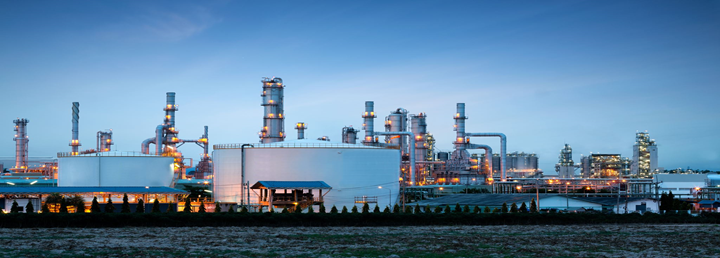
Oil prices surged past $100 (£74) a barrel to hit their highest level for more than seven years after Russia launched an invasion of Ukraine.
Russia is the second biggest exporter of crude oil, and is also the world’s largest natural gas exporter.
Russia’s invasion of Ukraine could spell trouble for the U.S. economy, fuelling higher gasoline prices and hampering the post-coronavirus recovery.
Europe gets nearly a third of its oil and around 40% of its gas from Russia, much of it flowing through pipelines across Ukrainian territory. Small wonder then that prices are shooting up.
Brent crude oil has gone above $100 a barrel, while prices for gas on wholesale markets – where domestic suppliers buy what they need – are up sharply as well.
Supplies from Russia do not appear to have been affected – yet. But the fear that they will be, and that there could be a scramble for other resources, is pushing up costs.
Stock markets across Europe are tumbling, as investors fret about the potential economic impact of high energy prices and the potential for much wider sanctions as well.
According to market watchers, higher crude oil prices are major headwinds for a couple of sectors including aviation, paint, tyres and oil marketing companies. Brent crude oil has jumped over 30 per cent to $101.40 on a year-to-date basis till February 24. The commodity was at $77.78 per barrel on December 31, 2021.
While e-commerce has fuelled demand for packaging, pandemic-related labour shortages and shipping constraints are also making it harder to make and deliver the boxes used to carry everything from food to consumer goods.
Reference:
https://www.bbc.com/news/business-60502451
A significant uptick in M&A activity in the biosimilars sector is being driven by FDA regulatory reforms, a maturing patent litigation framework and a looming patent cliff — $200 billion of branded products are facing patent expiration by 2030.
The Drewry World Container Index edged lower this week as falling Asia-Europe rates outweighed firmer pricing on the Transpacific, with carriers preparing another round of blank sailings ahead of China’s Golden Week holiday.
On 14 July 2026, the European Parliamentary Research Service (EPRS) published a comprehensive briefing on PFAS (per- and polyfluoroalkyl substances), also known as ‘forever chemicals’. The document is intended to serve as a technical basis for MEPs in their upcoming political decisions on PFAS regulation and summarises the current state of scientific knowledge, regulation and procedures.
Following a series of typhoon disruptions in East China during the month of August, major ports including Shanghai and Ningbo continue to experience congestion and operational recovery challenges. Industry reports indicate that vessel schedules, yard operations, and equipment circulation remain affected as terminals work through accumulated backlogs from successive storm events.
Under REACH Annex XVII Entry 78, the EU has banned the placing on the market of synthetic polymer microparticles (SPMs) unless a specific derogation applies. Derogations exist for essential uses such as:
As a result of the amendment of the CLP Regulation (Regulation (EC) No 1272/2008 on the classification, labelling and packaging of substances and mixtures), new hazard classes have entered into force.
In a converging policy shift on both sides of the Atlantic, European regulators this week published a roadmap toward fully replacing animal testing for chemical safety assessments, while the US Environmental Protection Agency issued a rare update to its list of alternative test methods.
The global pharmaceutical fine chemicals sector is undergoing a profound transformation, with India emerging as a central growth engine amid sweeping changes in supply chain strategies and regulatory priorities. As drug makers and contract manufacturers adapt to stricter oversight and evolving sourcing preferences, the industry’s focus is shifting rapidly from cost efficiency to compliance, localisation and technical sophistication.
Stakeholders are being encouraged to weigh in on the European Chemicals Agency (ECHA) 60-day public consultation period related to a planned ban on per-and-polyfluoroalkyl (PFAS) substances, also known as forever chemicals.