INTRODUCTION
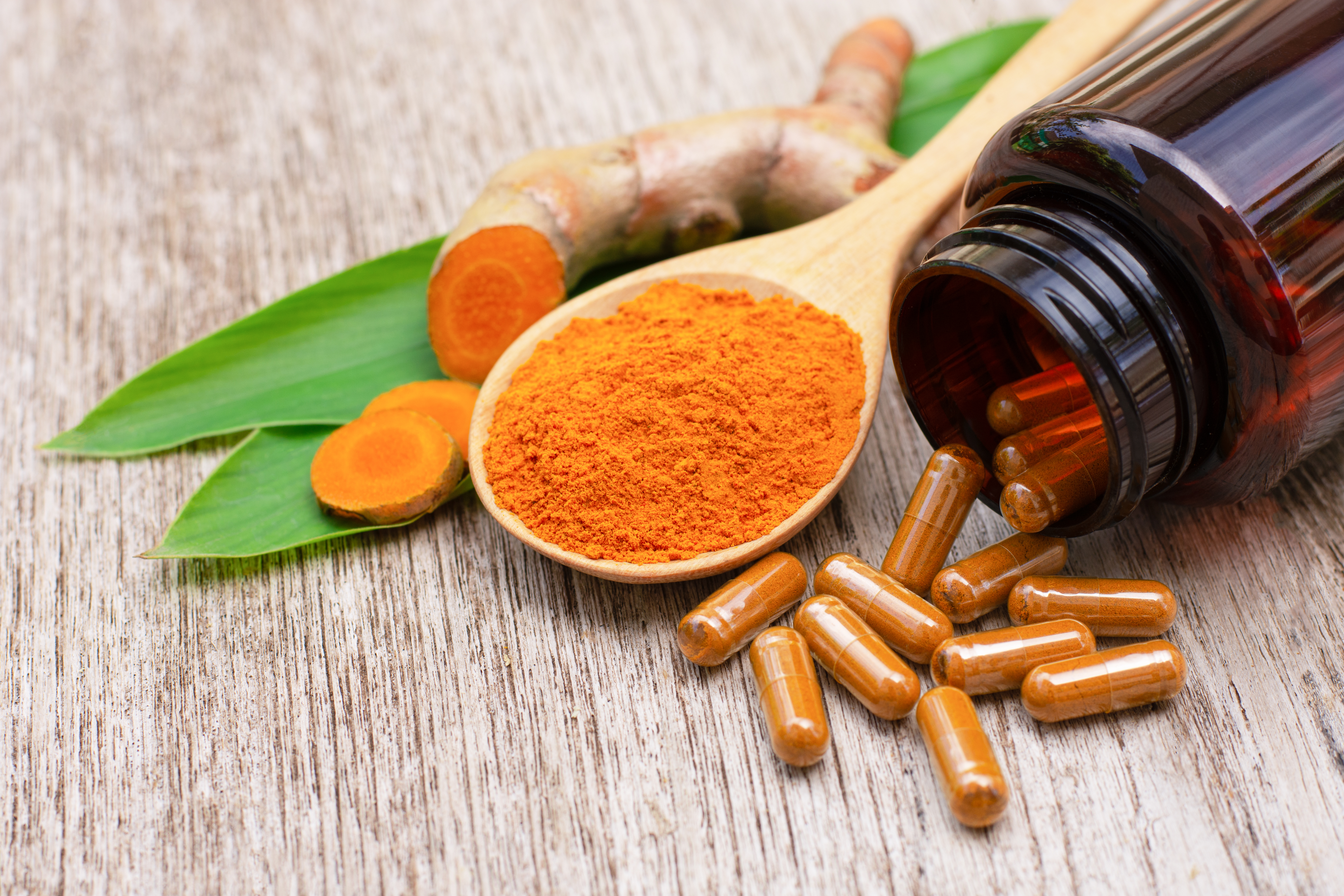
Curcumin is a bright yellow chemical produced by plants of the Curcuma longa species. It is the principal curcuminoid of turmeric (Curcuma longa), a member of the ginger family, Zingiberaceae. It is sold as an herbal supplement, cosmetics ingredient, food flavoring, and food coloring.
Chemically, curcumin is a diarylheptanoid, belonging to the group of curcuminoids, which are phenolic pigments responsible for the yellow color of turmeric.
| Synonyms | 1,7-Bis-(4-hydroxy-3-methoxyphenyl)-1,6-heptadiene-3,5-dione Turmeric yellow Diferuloylmethane |
| CAS no. | 458-37-7 |
| EINECS no. | 207-280-5 |
| Molecular formula | C21H20O6 |
| Molecular weight | 368.39 |
| Structure | 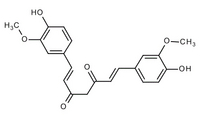 |
Applications
Widely used in food, dishes, cakes, candy, canned drinks, cosmetics & medicine coloring.
Some Health Benefits:
| Turmeric contains bioactive compounds with powerful medicinal properties |
| Curcumin is a natural anti-inflammatory compound |
| Dramatically increases the anti-oxidant capacity of the body |
| Boosts brain derived neurotrophic factor, linked to improved brain function and a lower risk of brain diseases |
| Curcumin should lower the risk of heart disease |
| Curcumin can help prevent (and perhaps even treat) cancer |
| Curcumin may be useful in preventing and treating Alzheimer’s disease |
| Arthritis patients respond very well to curcumin supplements |
| Curcumin has incredible benefits against depression |
| Curcumin may help delay aging and fight age related chronic diseases |
| Grades available |
|---|
| 1. Curcumin 95% |
| 2. Curcumin 95% Solvent Free |
| 3. Curcumin 95% Ethanolic Extract |
| 4. Curcumin Water Dispersible 10% & 20% |
SPECIFICATIONS
| Test | Test Method | Specification |
|---|---|---|
| Physicochemical Tests | ||
| Botanical name | – | Curcuma longa |
| Plant part used | – | Rhizome |
| Herb ratio | – | 25:1 |
| Description | Visual | Orange yellow coloured powder |
| Loss on drying at 105°C | USP<731> | NMT 2.0% w/w |
| Assay | ||
| Curcuminoids content | by HPLC | NLT 95% w/w |
| Total Heavy metals | USP<231> | NMT 10 ppm |
| Arsenic | ICP-MS | NMT 1.0 ppm |
| Lead | ICP-MS | NMT 3.0 ppm |
| Mercury | ICP-MS | NMT 0.1 ppm |
| Cadmium | ICP-MS | NMT 1.0 ppm |
| Microbiological analysis | ||
| Total plate count | USP<2021> | NMT 1000 Cfu/gm |
| Yeast & Mould | USP<2021> | NMT 100 Cfu/gm |
| Salmonella | USP<2022> | Absent |
| Escherichia coli | USP<2022> | Absent |
| Staphylococcus aureus | USP<2022> | Absent |
| Pseudomonas aeruginosa | USP<2022> | Absent |
STORAGE
Store in a cool, dry, well – ventilated warehouse. Stay away from fire and heat. Prevent direct sunlight.
PACKING
25 kg drum.
DMF status
Available US-DMF filed with US FDA.
No matter the quantity you need, our exceptional quality and service will make ExSyn your supplier of choice! If you need any additional information or SDS, please contact us.
TensyraTM N-10 (Octoxinol 10; tert-octyl phenyl ethoxylate) is a non-ionic surfactant known for its excellent solubilizing and membrane-permeabilizing properties. It features a hydrophilic polyethylene oxide chain paired with a lipophilic aromatic hydrocarbon group.It readily breaks down biological membranes to lyse cells, solubilize proteins, and permeabilize cell membranes for assays.
Teprenone (Geranylgeranylacetone, GGA) is a mixture of the all-trans and mono-cis isomers of 6,10,14,18-tetramethyl-5,9,13,17-nonadecatetraen-2-one (in a weight ratio of 3:2). It is an acyclic isoprenoid compound with a structure like retinoids and is widely used for the treatment of gastrointestinal ulcers.
Ciclopirox Olamine (CPO) is the N-oxide of a 2 -hydroxy pyridine derivative that carries antifungal, antibacterial, and anti-inflammatory properties. It is composed of 6-cyclohexyl-1-hydroxy-4-methyl-2(1H)-pyridone combined with 2 aminoethanol (olamine) in a 1:1 ratio.
N,N-Dimethylglycine sodium salt (DMG Na) is the sodium salt form of N,N-dimethylglycine, a tertiary amino acid derivative is white to off white crystalline solid, freely soluble in water.
Blown Castor Oil (15-17 Poise) is a modified grade of Castor oil. The “15-17 Poise” specification refers to its viscosity range, indicating a medium-viscosity blown oil suitable for industrial applications requiring improved body, tackiness, and elasticity compared to regular castor oil.
Dimethylaminoethanol (DMAE) is a is a tertiary amine that is ethanolamine having two N-methyl substituents. It is clear & colourless to pale yellow liquid with ammoniacal odor. DMAE is stable at room temperature and is completely miscible with water as well as organic solvents such as alcohols and ethers. It decomposes at high temperatures. It is a versatile chemical intermediate primarily used as a curing agent for polyurethane foams and epoxy resins.
1,4,7-Trimethyl-1,4,7-triazonane (Me₃TACN) is a valuable macrocyclic tridentate ligand derived from 1,4,7-triazacyclononane. In Me₃TACN, each nitrogen atom is substituted with a methyl group, which significantly modifies its steric and electronic properties. Me₃TACN is widely used as a ligand in coordination chemistry due to its ability to form stable complexes with transition metals such as Cu, Ni, Fe, Mn, and Zn.
Adenosine is a naturally occurring purine nucleoside composed of adenine and ribose, present in all living cells. It plays a vital role in biochemical processes such as energy transfer (ATP/ADP), signal transduction, and regulation of physiological functions, and is widely used in pharmaceutical applications.
Methyl-2-Methoxy-5-Sulfamoyl Benzoate (MSMB) is a sulfur containing organic building block acting as a chemical intermediate. MSMB contains ester and sulfamoyl functional groups, which make it useful as a pharmaceutical and fine-chemical intermediate.