
INTRODUCTION
2-(Benzylmethylamino)-1-phenylpropanone is an organics intermediate from ketone category. It is a compound with notable pharmacological potential and itself has excellent cytotoxic properties. In trade, the chemicals is referred to as AMK.
Manufacture
2-(Benzylmethylamino)-1-phenylpropanone is manufactured by condensation of N-methyl-benzylamine with bromopropiophenone, the latter is in turn produced from propiophenone.
| Synonym | AMK N-Benzyl-N-methylamino-propiophenone |
| CAS no. | 16735-30-1 |
| EINECS no. | Not available |
| Molecular formula | C17H19NO |
| Molecular weight | 253.34 |
| Structure | 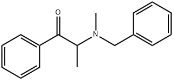 |
Applications
| APIs |
|---|
| Pseudoephedrine HCl |
| Methcathinone |
| Anticancer drugs with more tumor selectivity |
| Intermediates |
|---|
| 1-[4-(2-Aminoethoxyl)phenylcarbonyl]-3,5-bis(benzylidene)-4-piperidone |
| Others |
|---|
| Agrochemicals |
| Material science |
| Building block for novel polymers and ion exchange resins |
| Proteomic research |
SPECIFICATIONS
| Test | Unit | Specification |
|---|---|---|
| Appearance | – | Yellowish crystalline powder |
| Identification by IR | – | IR spectrum is concordant with standard |
| Solubility | – | Soluble in chloroform; insoluble in water |
| Melting point | °C | 43.0 – 46.0 |
| Loss on drying | % | Max 3.5 |
| Water | % | Max 3.5 |
| ROI | % | Max 0.2 |
| HPLC Purity | ||
| Propiophenone | % | Max 0.5 |
| Bromopropiophenone | % | Max 0.5 |
| Unspecified impurities | % | Max 0.5 |
| Total impurities | % | Max 1.0 |
| HPLC purity | % | Min 99.0 |
STORAGE
Stored at 2 – 8°C
PACKING
200 kg drum
REACH Status
Not registered
ExSyn offers 2-(benzylmethylamino)-1-phenylpropanone on commercial scales under refrigerated transport and welcomes enquiries. No matter the quantity you need, our exceptional quality and service will make ExSyn your supplier of choice! If you need any additional information or SDS, please contact us.
Adenosine is a naturally occurring purine nucleoside composed of adenine and ribose, present in all living cells. It plays a vital role in biochemical processes such as energy transfer (ATP/ADP), signal transduction, and regulation of physiological functions, and is widely used in pharmaceutical applications.
Methyl-2-Methoxy-5-Sulfamoyl Benzoate (MSMB) is a sulfur containing organic building block acting as a chemical intermediate. MSMB contains ester and sulfamoyl functional groups, which make it useful as a pharmaceutical and fine-chemical intermediate.
Imidazolidinyl urea is a widely used antimicrobial preservative in the cosmetic and personal care industry. It is a formaldehyde-releasing compound that effectively inhibits the growth of bacteria, yeast, and molds, thereby extending the shelf life of formulations. Due to its broad-spectrum efficacy and cost-effectiveness, it is commonly used in rinse-off and leave-on products within regulated concentration limits.
Phosphorodiamidites are a unique class of phosphorus-based compounds characterized by one P–O bond and two P–N moieties. 2-Cyanoethyl tetraisopropylphosphorodiamidite plays a crucial role in solid-phase oligonucleotide synthesis. Beyond their application as synthetic precursors for oligonucleotides, phosphorodiamidites have also been reported as valuable starting materials for the synthesis of industrially relevant polymers and flame-resistant materials, including adhesives, coatings, and laminates.
Ferric maltol is an oral iron complex composed of ferric iron (Fe³⁺) chelated with maltol, designed to improve iron absorption while reducing common gastrointestinal side effects associated with traditional iron salts. It is primarily used in the management of iron deficiency with better tolerability.
Phosphatidylcholine (PC) is one of the most important phospholipids derived from soya lecithin and represents a key structural component of cell membranes. Phosphatidylcholine 90% refers to a highly purified grade where the PC content is enriched to around 90% through specialized extraction and purification steps.
Indorez® Kota Resin is a modified non self-cured phenolic resin, it can increase rubber adhesion to steel, polyester, rayon, nylon, aramid and other fabric cord. It’s an adhesive agent, acts as methylene acceptor, can 100% replace resorcinol and resorcinol resins in resorcinol- formaldehyde-silica, enhance adhesion between rubber and reinforcing materials.
Glyceryl Stearate Citrate (GSC) is a plant-derived, biodegradable emulsifier commonly used in cosmetics and personal-care products. It functions primarily as an anionic oil-in-water (O/W) emulsifier, helping blend oils and water into smooth, stable creams and lotions. Its natural origin and gentle profile make it popular in eco-certified, organic, and sensitive-skin formulations.
DL-Serine is a racemic mixture of both the D- and L-forms of the amino acid serine, which is a polar, nonessential amino acid. It is an α-amino acid characterized by its hydroxyl-containing side chain, which enables it to take part in numerous biochemical reactions and synthetic processes. It functions as a pivotal intermediate in the biosynthesis of amino acids, including glycine and cysteine, underscoring its essential role in cellular metabolism. Moreover, it constitutes a critical pharmaceutical intermediate for the synthesis of a broad spectrum of therapeutic agents and drug candidates.