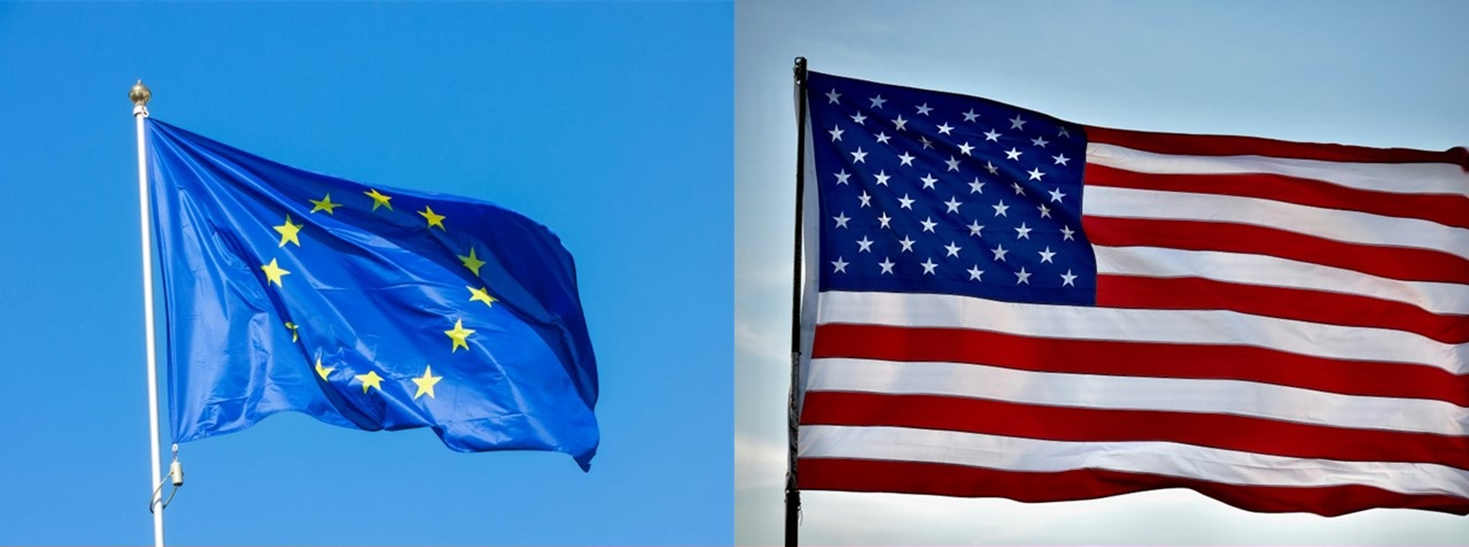
Most chemicals exported from the 27 member countries of the European Union into the US will be subject to a 15% tariff on top of their selling prices under an agreement signed on July 27 between the US and the European Commission.
The tariffs, which will rise from about 1% on average, will come into effect on Aug. 1. Most other industrial sectors in the EU, including the auto industry, also face a 15% tariff. The increase comes as a blow to the European chemical industry, which is already struggling with high production costs and soft local market conditions.
Some specialty chemicals for high-tech applications, including those for making semiconductors, will be exempt from the tariff, as will be some generic drugs, agricultural products, natural resources, and critical raw materials, the EC says. Most drugs and drug active ingredients, though, will be subject to the 15% tariff. Details about the specialty chemicals that are exempt have yet to emerge.
The new tariff regime is likely to have a significant impact on the EU chemical industry. The US is the sector’s biggest export market, accounting in 2023 for about $42 billion of its total sales of $723 billion, according to the latest data from the European Chemical Industry Council, Europe’s biggest chemical trade association.
For more details, please visit:
https://cen.acs.org/policy/trade/European-chemical-industry-laments-15/103/web/2025/07?utm_source=chatgpt.com
Today we announce that Exim is rebranding as ExSyn. We are presenting a new brand identity and website as a reflection of our relentless transformation over the course of 30 years serving the pharma and chemical industries. The new brand builds upon our core strengths as a sourcing company and captures our most essential duty: helping improve people’s health and lives.
A significant uptick in M&A activity in the biosimilars sector is being driven by FDA regulatory reforms, a maturing patent litigation framework and a looming patent cliff — $200 billion of branded products are facing patent expiration by 2030.
The Drewry World Container Index edged lower this week as falling Asia-Europe rates outweighed firmer pricing on the Transpacific, with carriers preparing another round of blank sailings ahead of China’s Golden Week holiday.
Diacetone Alcohol (DAA) is an aliphatic hydroxy ketone produced through the base-catalysed aldol addition of two acetone molecules. It contains both ketone and tertiary hydroxyl functionalities, offering excellent solvency and chemical reactivity.
As a high-boiling oxygenated solvent and valuable chemical intermediate, DAA finds broad application in paints and coatings, printing inks, adhesives, industrial cleaning, cosmetics, and textiles. It is also used as an intermediate in the production of mesityl oxide and MIBK. (4-methylpentan-2-one).