INTRODUCTION
Yttrium oxide (Y2O3), also known as yttria, is an air-stable, odorless white powder. It is a highly stable, chemically inert ceramic with a very high melting point. It is insoluble in water but readily dissolves in most strong acids. Increasing the specific surface area and porosity of Y2O3 can further improve its relevant physical and chemical properties.
MANUFACTURE
Yttrium oxide (Y₂O₃) is commonly synthesized using precipitation, hydrothermal processing, and sol-gel methods. The standard chemical route involves precipitating yttrium hydroxide or oxalate from a salt precursor. The precipitated cake is washed and dried followed by calcination at temperature between 600 ˚C and 900 ˚C for 2 to 4 hours. The thermal decomposition of the precursor yields pure cubic phase yttrium oxide (Y2O3) and gaseous byproducts. These scalable wet-chemical methods transform purified yttrium salt solutions into high-purity oxide powders.
| Synonyms | Yttria, diyttrium trioxide, yttrium sesquioxide |
| CAS no. | 1314-36-9 |
| EINECS no. | 215-233-5 |
| Molecular formula | Y2O3 |
| Molecular weight | 225.81 g/mol |
| Structure | 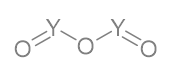 |
APPLICATIONS
| Phosphors in display technology : |
| • It is when doped with europium, is used to create the red phosphor in color television tubes and LED displays. |
| High-performance ceramics: |
| • Yttrium Oxide imparts excellent resistance to heat and corrosion, making it indispensable in producing ceramics for aerospace components, cutting tools, and medical implants. |
| Optical coatings: |
| • Optical transparency, high refractive index and ability of Yttrium oxide to withstand high temperatures makes it applicable in high-power laser and space-based optical system. |
| Catalyst in chemical reactions: |
| • Yttrium oxide is used as a crucial catalyst in cracking processes to breakdown complex hydrocarbons in petrochemical industries. |
| Additive in metallurgy: |
| • Yttrium oxide is used as an additive in metallurgy to refine grain structure and improve mechanical properties of metals and alloys. |
| Radioactive medicine: |
| • Yttrium-90, a radioactive isotope derived from Yttrium Oxide, is used as in the treatment of liver cancer, neuroendocrine tumors, joint inflammation. |
| Film capacitor: |
| • Yttrium oxide incorporated into the dielectric material enhances the insulation characteristic of the material, leading to higher capacitance. |
| Magnetic material: |
| • It is used in the production of Yttrium Iron Garnet, a magnetic material used in microwave and telecommunication devices. |
SPECIFICATIONS
| Test | Unit | Specification |
|---|---|---|
| Appearance | – | White to almost white powder |
| Treo | % | NLT 99.30 |
| LOI | % | NMT 0.40 |
| Y2O3 | % | NMT 99.999 |
| La2O3 | ppm | NMT 1 |
| CeO2 | ppm | NMT 1 |
| Pr6O11 | ppm | NMT 1 |
| Nd2O3 | ppm | NMT 1 |
| Sm2O3 | ppm | NMT 1 |
| Gd2O3 | ppm | NMT 1 |
| Fe2O3 | ppm | NMT 1 |
| SiO2 | ppm | NMT 16 |
| CaO | ppm | NMT 3 |
STORAGE & PRECAUTION
Store in cool place. Keep container tightly closed in a dry and well-ventilated place. Keep in a dry place.
PACKING
25 kg HDPE Bags with inner polythene liner
REACH STATUS
Not registered
ExSyn offers Yttrium oxide on commercial scales and welcomes enquiries. No matter the quantity you need, our exceptional quality and service will make ExSyn your supplier of choice! If you need any additional information or SDS, please contact us.
Today we announce that Exim is rebranding as ExSyn. We are presenting a new brand identity and website as a reflection of our relentless transformation over the course of 30 years serving the pharma and chemical industries. The new brand builds upon our core strengths as a sourcing company and captures our most essential duty: helping improve people’s health and lives.
A significant uptick in M&A activity in the biosimilars sector is being driven by FDA regulatory reforms, a maturing patent litigation framework and a looming patent cliff — $200 billion of branded products are facing patent expiration by 2030.
The Drewry World Container Index edged lower this week as falling Asia-Europe rates outweighed firmer pricing on the Transpacific, with carriers preparing another round of blank sailings ahead of China’s Golden Week holiday.
Diacetone Alcohol (DAA) is an aliphatic hydroxy ketone produced through the base-catalysed aldol addition of two acetone molecules. It contains both ketone and tertiary hydroxyl functionalities, offering excellent solvency and chemical reactivity.
As a high-boiling oxygenated solvent and valuable chemical intermediate, DAA finds broad application in paints and coatings, printing inks, adhesives, industrial cleaning, cosmetics, and textiles. It is also used as an intermediate in the production of mesityl oxide and MIBK. (4-methylpentan-2-one).