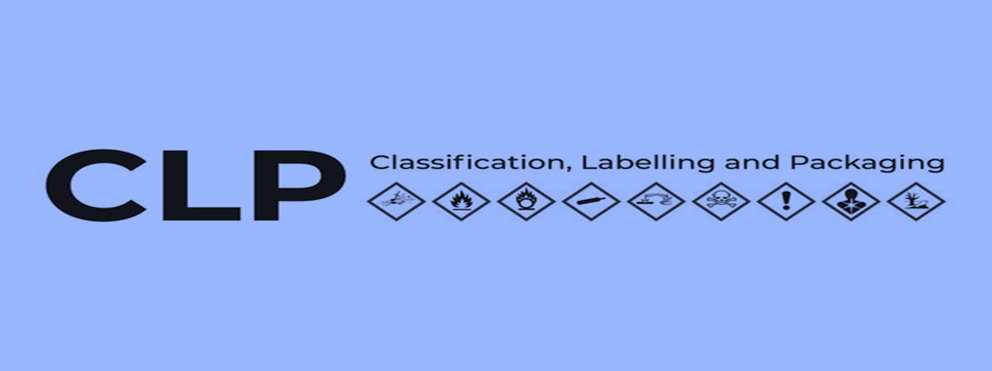
As a result of the amendment of the CLP Regulation (Regulation (EC) No 1272/2008 on the classification, labelling and packaging of substances and mixtures), new hazard classes have entered into force.
While the process has already started for substances, for manufacturers and importers of mixtures the relevant deadline was 1 May 2026.
The new regulatory approach is structured around three main groups, all of which assess long-term effects on both human health and the environment.
A] Endocrine disruptors (ED)
B] PBT and vPvB substances – Persistent,
Bioaccumulative and Toxic
C] PMT and vPvM substances – Persistent,
Mobile and Toxic
For the new hazard classes, hazard communication in many cases is provided via EUH statements (supplemental hazard statements) and—depending on the overall classification—possibly a signal word (“Danger” / “Warning”).
Updating the classification of mixtures modifies the content of safety data sheets (SDSs) at several points: Section 1, 2, 3, 11 & 12. Special attention should be paid to the consistency of Sections 11 and 12 with the classification (Section 2).
Application deadlines and transitional arrangements:
The most critical point of compliance checking is interpreting the deadlines correctly. The legislator introduced a staged system that distinguishes between substances and mixtures, and between new products and those already on the market.
Substances:
New substances: those first placed on the market after 1 May 2025 must apply the new rules immediately.
Substances already on the market: those already on the market before this date are granted a transitional period until 1 November 2026.
Mixtures:
For mixtures, the deadlines are later, reflecting that reclassification of the constituent substances is a time-consuming process.
New mixtures: those first placed on the market after 1 May 2026 must comply with the new classification rules.
Mixtures already on the market: “on-the-shelf” products may be relabelled and reclassified until 1 May 2028.
Reference:
https://www.msds-europe.com/clp-2026-may-1-new-hazard-classes-mixtures-sds-labelling/
Today we announce that Exim is rebranding as ExSyn. We are presenting a new brand identity and website as a reflection of our relentless transformation over the course of 30 years serving the pharma and chemical industries. The new brand builds upon our core strengths as a sourcing company and captures our most essential duty: helping improve people’s health and lives.
(S)-Oxetan-2-yl-methanamine is a chiral oxetane-containing primary amine. The compound features a strained four-membered oxetane ring and an aminomethyl substituent, making it a valuable building block in modern medicinal chemistry. Due to its unique physicochemical properties, including increased polarity and metabolic stability compared with conventional alkyl groups, it is widely employed as an advanced pharmaceutical intermediate in drug discovery and development programs.
Guanidine carbonate is a white, crystalline, water-soluble compound with an alkaline and ionic nature. Composed of guanidinium cations and carbonate anions, it offers chemical stability, buffering capacity, and good formulation compatibility. In textile applications, it is used in formulations and fabric treatments for its thickening, softening, lubricating, anti-static, and flame-retardant properties, contributing to improved fabric finish and performance.
On 14 July 2026, the European Parliamentary Research Service (EPRS) published a comprehensive briefing on PFAS (per- and polyfluoroalkyl substances), also known as ‘forever chemicals’. The document is intended to serve as a technical basis for MEPs in their upcoming political decisions on PFAS regulation and summarises the current state of scientific knowledge, regulation and procedures.