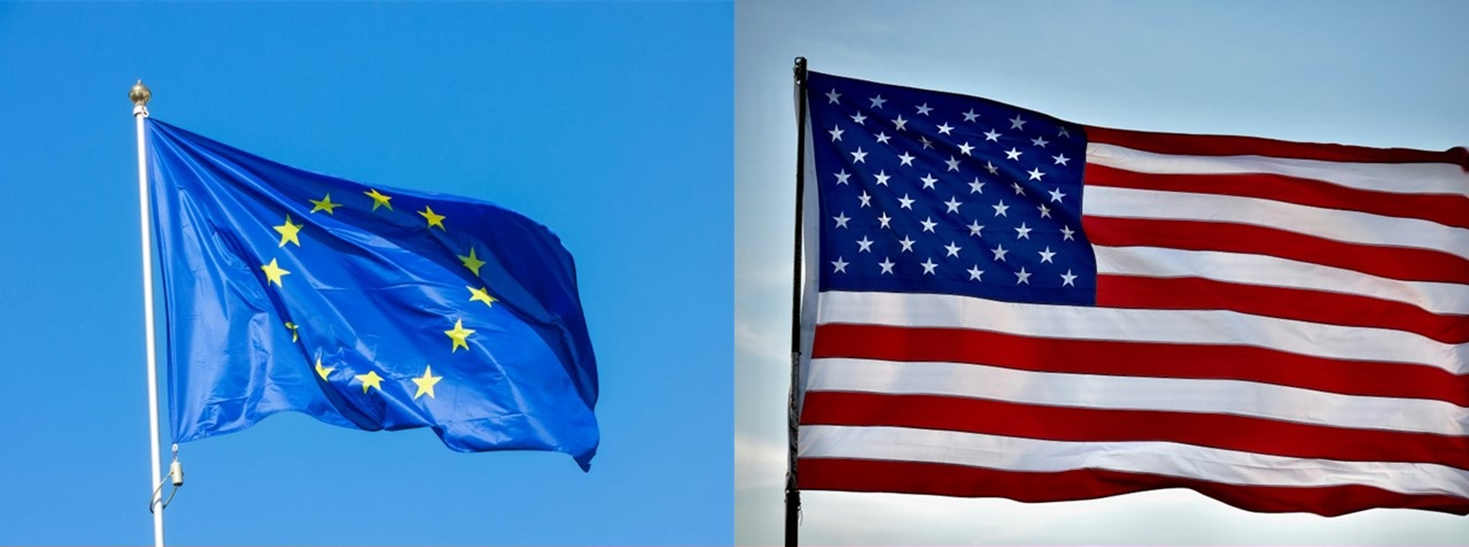
Most chemicals exported from the 27 member countries of the European Union into the US will be subject to a 15% tariff on top of their selling prices under an agreement signed on July 27 between the US and the European Commission.
The tariffs, which will rise from about 1% on average, will come into effect on Aug. 1. Most other industrial sectors in the EU, including the auto industry, also face a 15% tariff. The increase comes as a blow to the European chemical industry, which is already struggling with high production costs and soft local market conditions.
Some specialty chemicals for high-tech applications, including those for making semiconductors, will be exempt from the tariff, as will be some generic drugs, agricultural products, natural resources, and critical raw materials, the EC says. Most drugs and drug active ingredients, though, will be subject to the 15% tariff. Details about the specialty chemicals that are exempt have yet to emerge.
The new tariff regime is likely to have a significant impact on the EU chemical industry. The US is the sector’s biggest export market, accounting in 2023 for about $42 billion of its total sales of $723 billion, according to the latest data from the European Chemical Industry Council, Europe’s biggest chemical trade association.
For more details, please visit:
https://cen.acs.org/policy/trade/European-chemical-industry-laments-15/103/web/2025/07?utm_source=chatgpt.com
Today we announce that Exim is rebranding as ExSyn. We are presenting a new brand identity and website as a reflection of our relentless transformation over the course of 30 years serving the pharma and chemical industries. The new brand builds upon our core strengths as a sourcing company and captures our most essential duty: helping improve people’s health and lives.
Guanidine carbonate is a white, crystalline, water-soluble compound with an alkaline and ionic nature. Composed of guanidinium cations and carbonate anions, it offers chemical stability, buffering capacity, and good formulation compatibility. In textile applications, it is used in formulations and fabric treatments for its thickening, softening, lubricating, anti-static, and flame-retardant properties, contributing to improved fabric finish and performance.
On 14 July 2026, the European Parliamentary Research Service (EPRS) published a comprehensive briefing on PFAS (per- and polyfluoroalkyl substances), also known as ‘forever chemicals’. The document is intended to serve as a technical basis for MEPs in their upcoming political decisions on PFAS regulation and summarises the current state of scientific knowledge, regulation and procedures.
Following a series of typhoon disruptions in East China during the month of August, major ports including Shanghai and Ningbo continue to experience congestion and operational recovery challenges. Industry reports indicate that vessel schedules, yard operations, and equipment circulation remain affected as terminals work through accumulated backlogs from successive storm events.