
INTRODUCTION
Octadecylphosphonic acid (ODPA), a versatile chemical compound, serves as a surfactant and dispersant in applications spanning coatings, lubricants, and corrosion inhibition. With its hydrophobic octadecyl chain linked to a phosphonic acid group, it excels in surface modification, boosting adhesion in metal surfaces.
MANUFACTURE
It is synthesized by heating 1-bromooctadecane with triethyl phosphite. The reaction proceeds through a nucleophilic substitution mechanism.
| Synonym | n-Octadecylphosphonic acid, Phosphonic acid, octadecyl- |
| CAS no. | 4724-47-4 |
| EINECS no. | 225-216-4 |
| Molecular formula | C18H39O3P |
| Molecular weight | 334.47 |
| Structure | 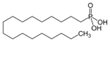 |
| APPLICATIONS |
|---|
| It serves as a vital surface modifier and coupling agent, enhancing adhesion between substrates and coatings or adhesives |
| It effectively inhibits corrosion in metals, notably aluminum and its alloys, by forming a protective barrier that wards off corrosive agents, thereby minimizing corrosion rates |
| It is essential for antistatic coatings and films in plastics, textiles, and paper, aiding in static charge dissipation and improving substrate conductivity |
| It enhances lubrication by serving as an additive in oils and greases, boosting boundary lubrication and diminishing friction and wear in mechanical systems like engines and gearboxes |
| It enhances adhesion in paints, coatings, and adhesives, ensuring strong bonds and enhanced durability. |
| ODPA-coated surfaces or nanoparticles show promise in biomedical applications like drug delivery, tissue engineering, and bioimaging due to their biocompatibility and customizable surface traits. |
SPECIFICATIONS
| Test | Unit | Specifications |
|---|---|---|
| Appearance | – | White to off-white powder |
| Identification by 1H NMR | – | Should confirm with the structure |
| Purity by GC | % | NLT 99.0 |
| Melting point | °C | Min 95.0 (final melt) |
STORAGE
Store at ambient temperature; Keep the container tightly closed
PACKING
HDPE drums
REACH Status
Not registered
ExSyn offers Octadecylphosphonic acid (ODPA) on commercial scales and welcomes enquiries. No matter the quantity you need, our exceptional quality and service will make ExSyn your supplier of choice! If you need any additional information or SDS, please contact us.
(S)-Oxetan-2-yl-methanamine is a chiral oxetane-containing primary amine. The compound features a strained four-membered oxetane ring and an aminomethyl substituent, making it a valuable building block in modern medicinal chemistry. Due to its unique physicochemical properties, including increased polarity and metabolic stability compared with conventional alkyl groups, it is widely employed as an advanced pharmaceutical intermediate in drug discovery and development programs.
Guanidine carbonate is a white, crystalline, water-soluble compound with an alkaline and ionic nature. Composed of guanidinium cations and carbonate anions, it offers chemical stability, buffering capacity, and good formulation compatibility. In textile applications, it is used in formulations and fabric treatments for its thickening, softening, lubricating, anti-static, and flame-retardant properties, contributing to improved fabric finish and performance.
Tin(II) sulfide (SnS) has emerged as a safe and sustainable semiconductor owing to its non-toxicity, low cost, and natural abundance. It has attracted significant interest for solar energy conversion in thin-film photovoltaic devices because of its suitable band gap, which is approximately 1.3 eV in the orthorhombic phase and 1.5-1.7 eV in the cubic phase. In addition to photovoltaic applications, SnS is used in solid-state lubricants, near-infrared detectors, Lithium-ion batteries, and various sensing devices.
Nikethamide is a synthetic organic compound derived from nicotinic acid (vitamin B₃). It consists of a pyridine ring linked to a diethyl amide functional group and belongs to the class of pyridine amide derivatives.
(2-Methoxy-1-methyl-2-oxoethyl)triphenylphosphonium bromide is a stabilized phosphonium salt widely used as an intermediate in organic synthesis. Due to presence of an ester group, the compound generates a stabilized ylide that is particularly useful for synthesizing α, β-unsaturated esters, valuable intermediates in pharmaceuticals, agrochemicals, fragrances, and fine chemicals.
p-tert-Butylphenol (PTBP), is an aromatic organic compound consists of a phenol ring substituted with a tert-butyl group at the para (4-) position, giving it improved thermal stability and hydrophobic properties compared to phenol. PTBP features significant hydrogen bonding capabilities, which enhance its solubility in organic solvents. PTBP is used primarily as an intermediate in the manufacturing of polycarbonate plastics, phenolic resins, and epoxy resins.
Yttrium oxide (Y2O3), also known as yttria, is an air-stable, odorless white powder. It is a highly stable, chemically inert ceramic with a very high melting point. It is insoluble in water but readily dissolves in most strong acids. Increasing the specific surface area and porosity of Y2O3 can further improve its relevant physical and chemical properties.
Ethyl 7,7,7-trifluoro-3-hydroxy-3-methylheptanoate is a fluorinated aliphatic hydroxy ester. The presence of the trifluoromethyl group imparts enhanced metabolic stability, lipophilicity, and unique physicochemical properties compared with non-fluorinated analogues. This compound is primarily used as a synthetic intermediate in pharmaceutical and agrochemical research.
2-Chloro-1,1,1-trimethoxyethane is an organochlorine orthoester compound commonly used as a versatile synthetic intermediate in organic and pharmaceutical chemistry. It is a colorless to pale yellow liquid with good reactivity toward nucleophilic substitution and cyclization reactions, making it valuable in the preparation of heterocyclic and bioactive molecules.