INTRODUCTION
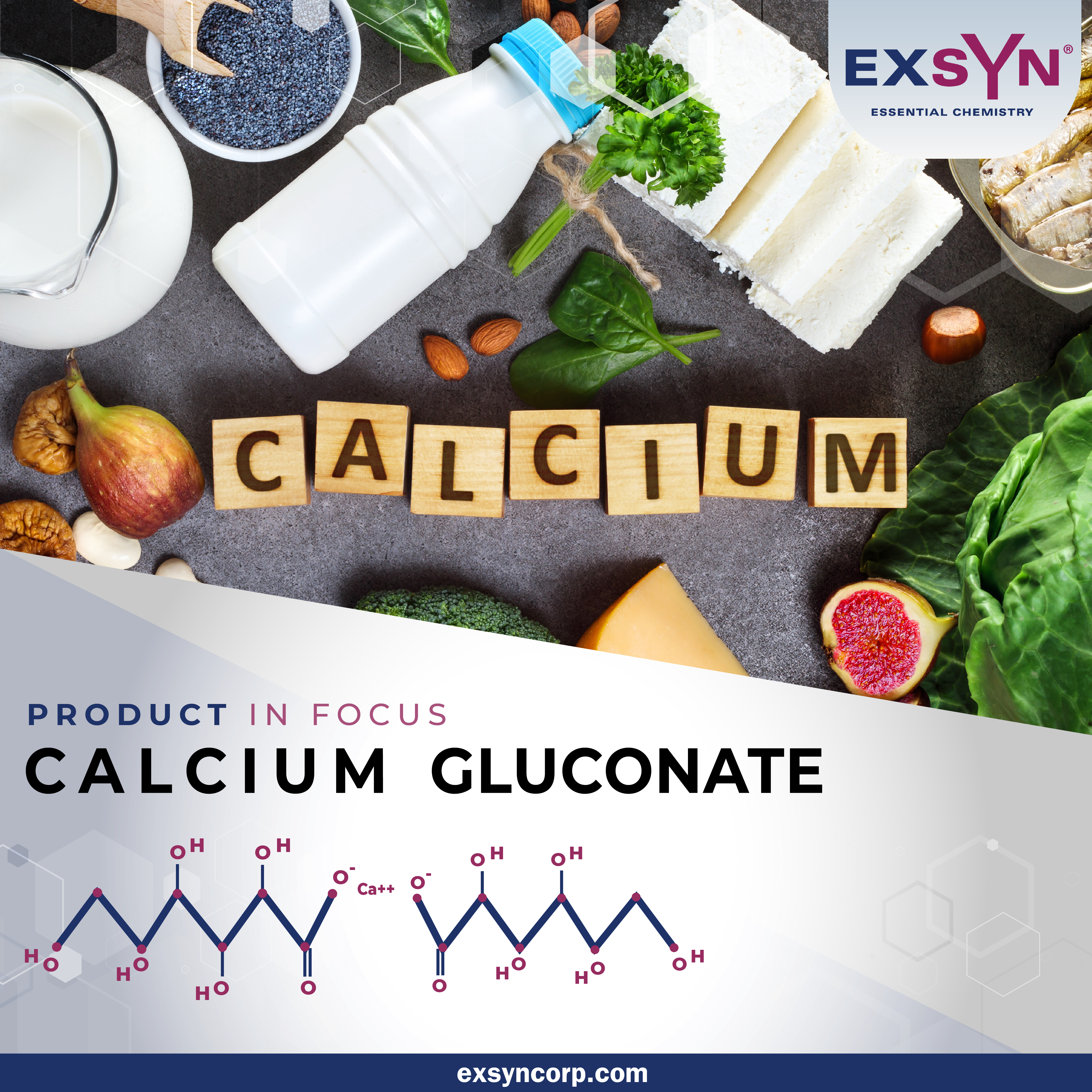
Calcium Gluconate is the calcium salt of gluconic acid, an oxidation product of glucose, and contains 9.3% calcium, which is about one-third of the calcium in the strength of calcium chloride. It is an ingredient found in a variety of supplements and vitamins and is used to lower potassium in the blood. Calcium gluconate is used as a mineral supplement and medication when there is insufficient calcium in the diet. Supplementation may be done to treat or prevent osteoporosis or rickets, consequences of hypocalcemia.
Manufacture
It is made by mixing gluconic acid with calcium carbonate or calcium hydroxide
| Synonyms | Calcium di-(D-gluconate) D-Gluconic acid calcium salt |
| CAS no. | 299-28-5 |
| EINECS no. | 206-075-8 |
| Molecular formula | C12H22CaO14 |
| Molecular weight | 430.37 |
| Structure | 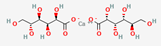 |
Applications
| Calcium gluconate is used to prevent or treat calcium deficiencies. Oral calcium salts are used as dietary supplemental therapy for people who may not get enough calcium in their regular diet |
| Calcium gluconate is used as a cardioprotective agent in high blood potassium |
| Calcium gluconate is the antidote for magnesium sulfate toxicity |
Calcium gluconate is also used as/for:
| Hyperkalemia |
| Hypocalcemia tetany |
| Dietary Supplement |
| Hungry Bone Syndrome |
| Tumor Lysis Syndrome |
SPECIFICATIONS – for injection, EP
| Test | Unit | Specification |
|---|---|---|
| Appearance | – | White or almost white, crystalline or granular powder |
| Solubility | – | Sparingly soluble in water, freely soluble in boiling water |
| Identification A. TLC B. Reaction of Calcium | – – | Shall pass the test Shall pass the test |
| Appearance of solution | – | At 60°C, solution S is not more intensely colored than reference solution B7. After cooling to 20°C, it is not more opalescent than reference suspension II. |
| pH | – | Between 6.4 and 8.3 |
| Organic impurities & Boric acid | – | Shall pass the test |
| Oxalates | ppm | Max 100 |
| Sucrose & reducing sugars | – | No red precipitate is formed |
| Chlorides | ppm | Max 50 |
| Phosphates | ppm | Max 100 |
| Sulphates | ppm | Max 50 |
| Iron | ppm | Max 5 |
| Magnesium & alkali metals | % | Max 0.4 |
| Assay as C12H22CaO14H2O | % | Between 99.0 and 101.0 |
| Microbial Contamination | ||
| Bacterial endotoxins | IU/g | Max 167 |
| Total aerobic microbial count | CFU/g | Max 10(square) |
STORAGE
Store in a cool & dry place. Keep away from moisture.
PACKING
25 kg drum.
REGISTRATION / CERTIFICATION
US-DMF, CEP, EU-GMP, EU-WC (Written Confirmation)
No matter the quantity you need, our exceptional quality and service will make ExSyn your supplier of choice! If you need any additional information or SDS, please contact us.
Glycolaldehyde dimer is the cyclic dimeric form of glycolaldehyde, the simplest hydroxyaldehyde. Glycolaldehyde is often supplied as stable dimeric solid, commonly identified as 2,5-dihydroxy-1,4-dioxane.
N,N-Diisopropylethylamine (DIPEA), also known as Hünig’s Base, is a sterically hindered tertiary amine. It is a colorless liquid with a strong amine odor and is widely used as a low nucleophilic organic base in pharmaceutical, agrochemical, and fine chemical synthesis. Due to its bulky structure, DIPEA effectively scavenges acids without participating in unwanted side reactions.
Tris(2,4-di-tert-butylphenyl) phosphite (TDPP) often recognized commercially as Irgafos 168 is a high-performance organophosphorus compound primarily utilized as secondary antioxidant and processing stabilizer. Its characteristic to undergo metallation reaction and provide a cost-effective synthetic processes allows it to be useful in biaryl coupling reactions.
Undecylenic acid is an unsaturated fatty acid naturally derived from castor oil. It is a colorless to pale yellow liquid with antifungal and antimicrobial properties. Chemically known as 10-undecenoic acid, it contains an 11-carbon chain with one double bond and is widely used in pharmaceuticals
5-Nitro Isophthalic Acid (5-NIPA) is an aromatic organic compound derived from isophthalic acid. The presence of two carboxylic acid groups along with a nitro substituent at the 5-position makes it a valuable intermediate in the manufacture of fine chemicals, pharmaceuticals, dyes, pigments, and advanced materials.
Trichloroacetonitrile is a halogenated organic compound belonging to nitrile family. Its strong electrophilic character makes it a valuable intermediate in organic synthesis. It readily undergoes hydrolysis, particularly under acidic or basic conditions, yielding trichloroacetamide and related derivatives.
Zinc Dialkyl Dithio Phosphate (ZDDP) belongs to a family of coordination compounds classified as members of transition metal dithiophosphate.
ZDDP is widely used based on a combination of different selected alcohols thus providing antiwear performance and enhanced thermal and hydrolytic stability. In combination with other additives, it is especially used for the formulation of hydraulic fluids, industrial gear oils, metalworking fluids, greases and automotive engine oils.
Dibutyl sulfide is an organosulfur. It is a clear, colorless to pale yellow liquid characterized by a strong sulfur-like odor and is primarily used as an intermediate in chemical synthesis, specialty organic manufacturing, and research applications. The compound exhibits good solvency properties and moderate thermal stability, making it useful in industrial and laboratory processes involving sulfur-containing organic compounds.
Oleylamine is a long-chain (C18) primary fatty amine derived from natural fatty acids, typically sourced from vegetable oils. It is produced from oleic acid through conversion of the carboxylic acid group (–COOH) into an amine group (–NH₂). With its optimal balance of hydrophobic chain length and reactive amine functionality it serves as a versatile and dependable building block for high-performance formulations.