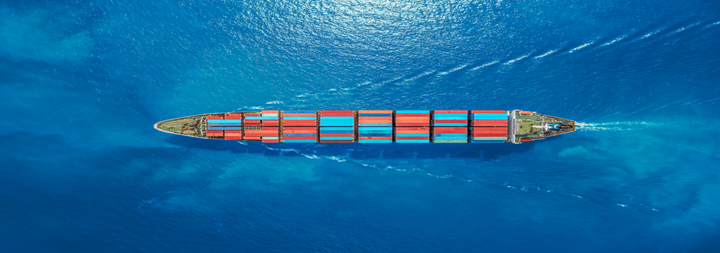
Amid ongoing Red Sea diversions by shipping giants like Maersk, CMA, logistics managers are globally confronting a dual challenge of escalating ocean and air freight prices alongside cargo disruptions due to heightened security risks posed by Houthis. As of Dec 22, 158 vessels were diverted from the Red Sea.
Attacks by Yemen’s Houthi militants on ships in the Red Sea are disrupting maritime trade through the Suez Canal with some vessels re-routing to a much longer East-West route via the southern tip of Africa.
The major carriers remain divided on sending vessels through the Suez Canal and the Red Sea as they continue to acknowledge that safety remains a concern. With the deployment of the international security coalition in the region, several carriers including Maersk are beginning to restore some services while others continue to say it is too soon due to the instability and safety issues.
CMA CGM also reported to customers that some vessels have made the transit through the Red Sea and that it was currently devising plans for the gradual increase in the number of vessels transiting through the Suez Canal.
After one of its vessels was attacked yesterday off the coast of Yemen, MSC Mediterranean Shipping Company said “Until their safety can be ensured MSC will continue to reroute vessels booked for Suez transit via the Cape of Good Hope.
Re-routing ships around Africa and away from the Suez Canal following attacks on commercial vessels in the Red Sea adds costs for shipping companies.
Container shipping is likely to see the largest freight rate increases, followed by bulk carriers. Tankers, many of which originate from the Middle East, are already enjoying high rates so rises may be limited. Air cargo rates may also benefit from demand for time-sensitive shipments.
Reference:
Today we announce that Exim is rebranding as ExSyn. We are presenting a new brand identity and website as a reflection of our relentless transformation over the course of 30 years serving the pharma and chemical industries. The new brand builds upon our core strengths as a sourcing company and captures our most essential duty: helping improve people’s health and lives.
TensyraTM N-10 (Octoxinol 10; tert-octyl phenyl ethoxylate) is a non-ionic surfactant known for its excellent solubilizing and membrane-permeabilizing properties. It features a hydrophilic polyethylene oxide chain paired with a lipophilic aromatic hydrocarbon group.It readily breaks down biological membranes to lyse cells, solubilize proteins, and permeabilize cell membranes for assays.
Teprenone (Geranylgeranylacetone, GGA) is a mixture of the all-trans and mono-cis isomers of 6,10,14,18-tetramethyl-5,9,13,17-nonadecatetraen-2-one (in a weight ratio of 3:2). It is an acyclic isoprenoid compound with a structure like retinoids and is widely used for the treatment of gastrointestinal ulcers.
Ciclopirox Olamine (CPO) is the N-oxide of a 2 -hydroxy pyridine derivative that carries antifungal, antibacterial, and anti-inflammatory properties. It is composed of 6-cyclohexyl-1-hydroxy-4-methyl-2(1H)-pyridone combined with 2 aminoethanol (olamine) in a 1:1 ratio.