
INTRODUCTION
Indorez® Kota Resin is a modified non self-cured phenolic resin, it can increase rubber adhesion to steel, polyester, rayon, nylon, aramid and other fabric cord. It’s an adhesive agent, acts as methylene acceptor, can 100% replace resorcinol and resorcinol resins in resorcinol- formaldehyde-silica, enhance adhesion between rubber and reinforcing materials.
It can substantially reduce fumes and weight loss compared to resorcinol; Kota is more environmentally friendly than resorcinol. Compared to RE and RF, KOTA is anti caking and with good storage stability, helps to reduce labor cost. It requires a methylene donor, e.g. HMMM or HEXA to complete the reaction and become thermoset.
This resin is mainly used by tyre manufacturers, hose manufacturers, conveyor belt manufacturers, textile-reinforced rubber product manufacturers.
| Chemical Name | Modified Phenolic Adhesive Resin |
| CAS no. | 9039-25-2 (Formaldehyde, polymer with methylphenol and phenol) |
| EINECS no. | 618-543-2 |
| Molecular formula | C14H16O3 |
| Molecular weight | 232.27 |
| Structure | 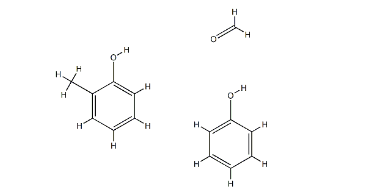 |
APPLICATIONS
| Rubber Industry |
| KOTA Resin is primarily used to improve the adhesion between rubber compounds and various reinforcement cords. It enhances bonding with steel, polyester, rayon, nylon, aramid and other fabric cord. |
| KOTA Resin is used by manufacturers of: Tyres, Conveyor belts (Textile and steel-cord belts) Industrial hoses, V-belts, timing belts & transmission belts, Rubberised fabrics and coated textiles, Rubber composites requiring strong interlayer bonding. |
| KOTA Resin is often incorporated in RFL (Resorcinol–Formaldehyde–Latex) dip formulations to increase bonding strength |
| Others |
| Kota resins have diverse applications across industries, including the production of high-pressure laminates for countertops, a binder for brake linings and clutch facings in the automotive sector, and electrical insulation for components like printed circuit boards. |
| They are also used in construction materials like plywood and particleboard, as adhesives for wood products, and as protective coatings due to their excellent heat, chemical, and water resistance. |
| They also find applications in hot melt traffic paints, coatings & primers, lamination adhesives, abrasive products. |
PROCESSING ADVANTAGES:
• Compatible with common rubbers like NR, SBR, BR, NBR
• Works in both dipping and compounding processes
• Provides consistent bonding during vulcanization
• Improves dispersion and wetting of fibres/cords
SPECIFICATIONS
| Test | Unit | Specification |
|---|---|---|
| Appearance | – | Light red to reddish brown |
| Form & Odour | – | Solid Granules & Odourless |
| Softening point | °C | 90.0 – 105.0 |
| Decomposition Temperature | °C | NLT 200 |
| Heating loss (105ºC, 2h) | % | NMT 2.0 |
STORAGE
Keep cool (approximately 25 ℃℃) and dry in closed original packaging
PACKING
25 kg paper plastic bag
REACH Status
Registered
ExSyn offers Kota Resin on commercial scales and welcomes enquiries. No matter the quantity you need, our exceptional quality and service will make ExSyn your supplier of choice! If you need any additional information or SDS, please contact us.
N,N-Dimethylglycine sodium salt (DMG Na) is the sodium salt form of N,N-dimethylglycine, a tertiary amino acid derivative is white to off white crystalline solid, freely soluble in water.
Blown Castor Oil (15-17 Poise) is a modified grade of Castor oil. The “15-17 Poise” specification refers to its viscosity range, indicating a medium-viscosity blown oil suitable for industrial applications requiring improved body, tackiness, and elasticity compared to regular castor oil.
Dimethylaminoethanol (DMAE) is a is a tertiary amine that is ethanolamine having two N-methyl substituents. It is clear & colourless to pale yellow liquid with ammoniacal odor. DMAE is stable at room temperature and is completely miscible with water as well as organic solvents such as alcohols and ethers. It decomposes at high temperatures. It is a versatile chemical intermediate primarily used as a curing agent for polyurethane foams and epoxy resins.
1,4,7-Trimethyl-1,4,7-triazonane (Me₃TACN) is a valuable macrocyclic tridentate ligand derived from 1,4,7-triazacyclononane. In Me₃TACN, each nitrogen atom is substituted with a methyl group, which significantly modifies its steric and electronic properties. Me₃TACN is widely used as a ligand in coordination chemistry due to its ability to form stable complexes with transition metals such as Cu, Ni, Fe, Mn, and Zn.
Adenosine is a naturally occurring purine nucleoside composed of adenine and ribose, present in all living cells. It plays a vital role in biochemical processes such as energy transfer (ATP/ADP), signal transduction, and regulation of physiological functions, and is widely used in pharmaceutical applications.
Methyl-2-Methoxy-5-Sulfamoyl Benzoate (MSMB) is a sulfur containing organic building block acting as a chemical intermediate. MSMB contains ester and sulfamoyl functional groups, which make it useful as a pharmaceutical and fine-chemical intermediate.
Imidazolidinyl urea is a widely used antimicrobial preservative in the cosmetic and personal care industry. It is a formaldehyde-releasing compound that effectively inhibits the growth of bacteria, yeast, and molds, thereby extending the shelf life of formulations. Due to its broad-spectrum efficacy and cost-effectiveness, it is commonly used in rinse-off and leave-on products within regulated concentration limits.
Phosphorodiamidites are a unique class of phosphorus-based compounds characterized by one P–O bond and two P–N moieties. 2-Cyanoethyl tetraisopropylphosphorodiamidite plays a crucial role in solid-phase oligonucleotide synthesis. Beyond their application as synthetic precursors for oligonucleotides, phosphorodiamidites have also been reported as valuable starting materials for the synthesis of industrially relevant polymers and flame-resistant materials, including adhesives, coatings, and laminates.
Ferric maltol is an oral iron complex composed of ferric iron (Fe³⁺) chelated with maltol, designed to improve iron absorption while reducing common gastrointestinal side effects associated with traditional iron salts. It is primarily used in the management of iron deficiency with better tolerability.