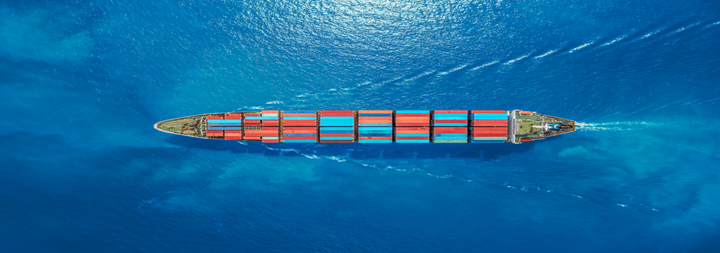
Amid ongoing Red Sea diversions by shipping giants like Maersk, CMA, logistics managers are globally confronting a dual challenge of escalating ocean and air freight prices alongside cargo disruptions due to heightened security risks posed by Houthis. As of Dec 22, 158 vessels were diverted from the Red Sea.
Attacks by Yemen’s Houthi militants on ships in the Red Sea are disrupting maritime trade through the Suez Canal with some vessels re-routing to a much longer East-West route via the southern tip of Africa.
The major carriers remain divided on sending vessels through the Suez Canal and the Red Sea as they continue to acknowledge that safety remains a concern. With the deployment of the international security coalition in the region, several carriers including Maersk are beginning to restore some services while others continue to say it is too soon due to the instability and safety issues.
CMA CGM also reported to customers that some vessels have made the transit through the Red Sea and that it was currently devising plans for the gradual increase in the number of vessels transiting through the Suez Canal.
After one of its vessels was attacked yesterday off the coast of Yemen, MSC Mediterranean Shipping Company said “Until their safety can be ensured MSC will continue to reroute vessels booked for Suez transit via the Cape of Good Hope.
Re-routing ships around Africa and away from the Suez Canal following attacks on commercial vessels in the Red Sea adds costs for shipping companies.
Container shipping is likely to see the largest freight rate increases, followed by bulk carriers. Tankers, many of which originate from the Middle East, are already enjoying high rates so rises may be limited. Air cargo rates may also benefit from demand for time-sensitive shipments.
Reference:
Today we announce that Exim is rebranding as ExSyn. We are presenting a new brand identity and website as a reflection of our relentless transformation over the course of 30 years serving the pharma and chemical industries. The new brand builds upon our core strengths as a sourcing company and captures our most essential duty: helping improve people’s health and lives.
(S)-Oxetan-2-yl-methanamine is a chiral oxetane-containing primary amine. The compound features a strained four-membered oxetane ring and an aminomethyl substituent, making it a valuable building block in modern medicinal chemistry. Due to its unique physicochemical properties, including increased polarity and metabolic stability compared with conventional alkyl groups, it is widely employed as an advanced pharmaceutical intermediate in drug discovery and development programs.
Guanidine carbonate is a white, crystalline, water-soluble compound with an alkaline and ionic nature. Composed of guanidinium cations and carbonate anions, it offers chemical stability, buffering capacity, and good formulation compatibility. In textile applications, it is used in formulations and fabric treatments for its thickening, softening, lubricating, anti-static, and flame-retardant properties, contributing to improved fabric finish and performance.
On 14 July 2026, the European Parliamentary Research Service (EPRS) published a comprehensive briefing on PFAS (per- and polyfluoroalkyl substances), also known as ‘forever chemicals’. The document is intended to serve as a technical basis for MEPs in their upcoming political decisions on PFAS regulation and summarises the current state of scientific knowledge, regulation and procedures.